
Richard E. Wagner
Entangled Political Economist
About Me
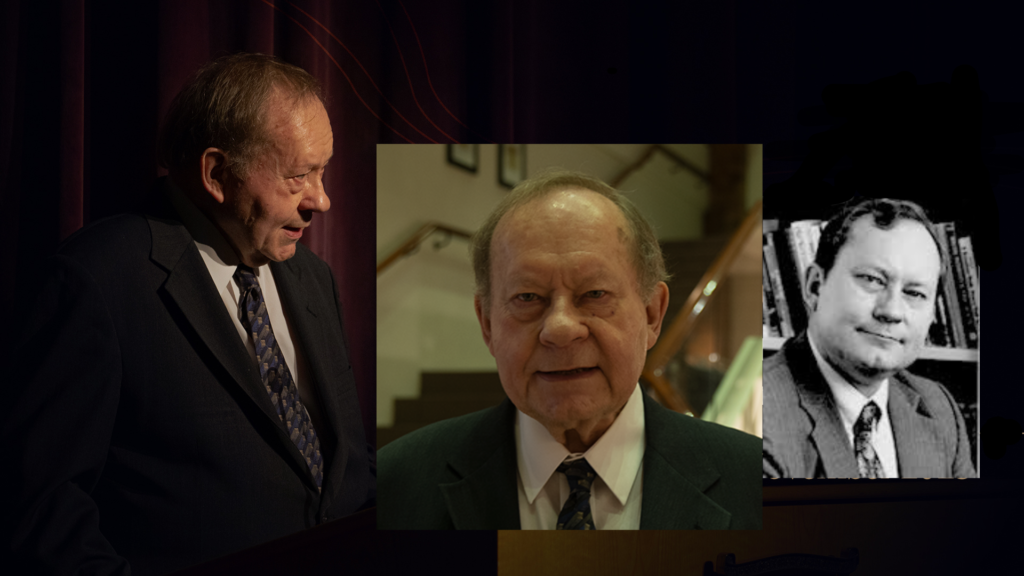
My academic career began for real in 1966 when I accepted an assistant professorship at the University of California Irvine. I was also offered a position at UCLA but made what proved to be a fateful choice by accepting Irvine’s offer. UCLA was a prominent program and I’m sure I would have prospered there, but I found myself attracted to the vision for Irvine that James March sketched when I interviewed with him in New York in December 1965. March, who had worked with Herbert Simon at Carnegie-Mellon, wanted to avoid creating ordinary departments by operating simply as a School of Social Science.
To push March’s intuition forward, all junior faculty were to teach introductory courses in fields other than where they received their degrees. With Irvine on a quarter system and the social sciences at Irvine comprising six disciplines, I ended up teaching anthropology and sociology one quarter and psychology and geography the other. At first, I found the experience exhilarating, for I thoroughly enjoyed reading works in those fields, talking with senior faculty in those fields, and preparing class materials. I felt like I imagined the proverbial pig in garbage would have felt.
My enthusiasm began to wane early in the 1967-68 school year when I realized the effort I was putting into exploring these fields was interfering with developing the record of publication I would need to receive tenure in a few years. So, I approached some inquiries I had received two years earlier from other universities, which resulted in my moving to Tulane for 1968 where I could devote the bulk of my efforts to scholarship in economics. Despite my staying within economics programs between my move to Tulane in 1968 and my retirement from George Mason in 2022, my experience from the Irvine years has remained alive within me.
Indeed, those years have in recent years exploded into my consciousness. The history of economics is typically presented as a tale of the classical economics of the 18th century (Adam Smith) giving way to the more scientific neo-classical economics of the late 19th century. This common claim is believable only if you are pre-determined to believe it. Otherwise, that claim will hold no water when examined by any impartial judge. The James March (Irvine) vision of a unified social science, which I was truly too immature to understand in 1966, was initiated in the 18th century by the philosophers of the Scottish Enlightenment. Those Scottish philosophers and their intuitions are congruent with some of the intuitions Jim March sought to inject into Irvine in the late 1960s—and which I seek to carry forward.
While I am now (December 2025) an old man, having retired from university life in June 2022, I am still filled with enthusiasm and vigor for pursuing with modern analytical techniques, tools, and modes of thought, the intuitions and insights those Scottish philosophers from long ago brought into the world. The analytic objects we denote as societies surely entail law-like properties that are open to articulation. The individuals who inhabit those societies and who project their propulsive energies into their societies likewise are subject to law-like features. I do not counsel any return to the Scottish Enlightenment. Truly, you can’t go home again. Any open-minded thinker who puzzles about the hugely varied experiences of people living in societies throughout the ages while recognizing all the same that law-like properties (think gravity) are inviolable, will recognize that those law-like properties will limit the scope for sentimental action while recognizing our ability through collective action to influence the quality of our common lives, both for better and for worse.
When Benjamin Franklin left the Constitutional Convention in 1787, a woman asked him: “Mr. Franklin, what sort of government did you folks create?” Franklin responded: “A republic, if you can keep it.” Implicit in Franklin’s statement is recognition humans are not blank slates to be written on at will, while yet holding within themselves the ability to generate modes of living together ranging from societies that had to treat citizens as prisoners (think USSR) to maintain population to those that had to erect barriers (think USA) to prevent being overrun by outsiders. The thinkers of the Scottish Enlightenment sought for analytical guidance to forestall the dire outcomes that Franklin recognized was always possible. Economics was born as a discipline of systematic thought during the Scottish Enlightenment.
In this website I extend this autobiographical sketch into a short elaboration of my social philosophy, followed by my CV; however, my prime interest in constructing this website lies in the current projects tab. I am blessed by having several former graduates of George Mason’s Ph.D. program with whom I worked as students and who express a desire to continue working with me, from which I anticipate generating a flow of papers and books into the indefinite future. Perusal of this tab will keep you appraised of some of the work of these fine thinkers in amplifying recognition that economics is centrally concerned with the ordering of social relationships and not with some hypothesized optimal allocation of resources: it is societies and not idealized rational individuals are the prime objects of economic inquiry.